BOOTH TOUR
Welcome to Royal Master Grinders Booth 6626 from IMTS. We are looking forward to meeting many of you in person in September in Chicago. Until then, take a quick look at the Booth Tour from 2024.
ROYAL MASTER GRINDERS BOOTH N-6626
Welcome to Royal Master Grinders Booth 6626 from IMTS. We are looking forward to meeting many of you in person in September in Chicago. Until then, take a quick look at the Booth Tour from 2024.
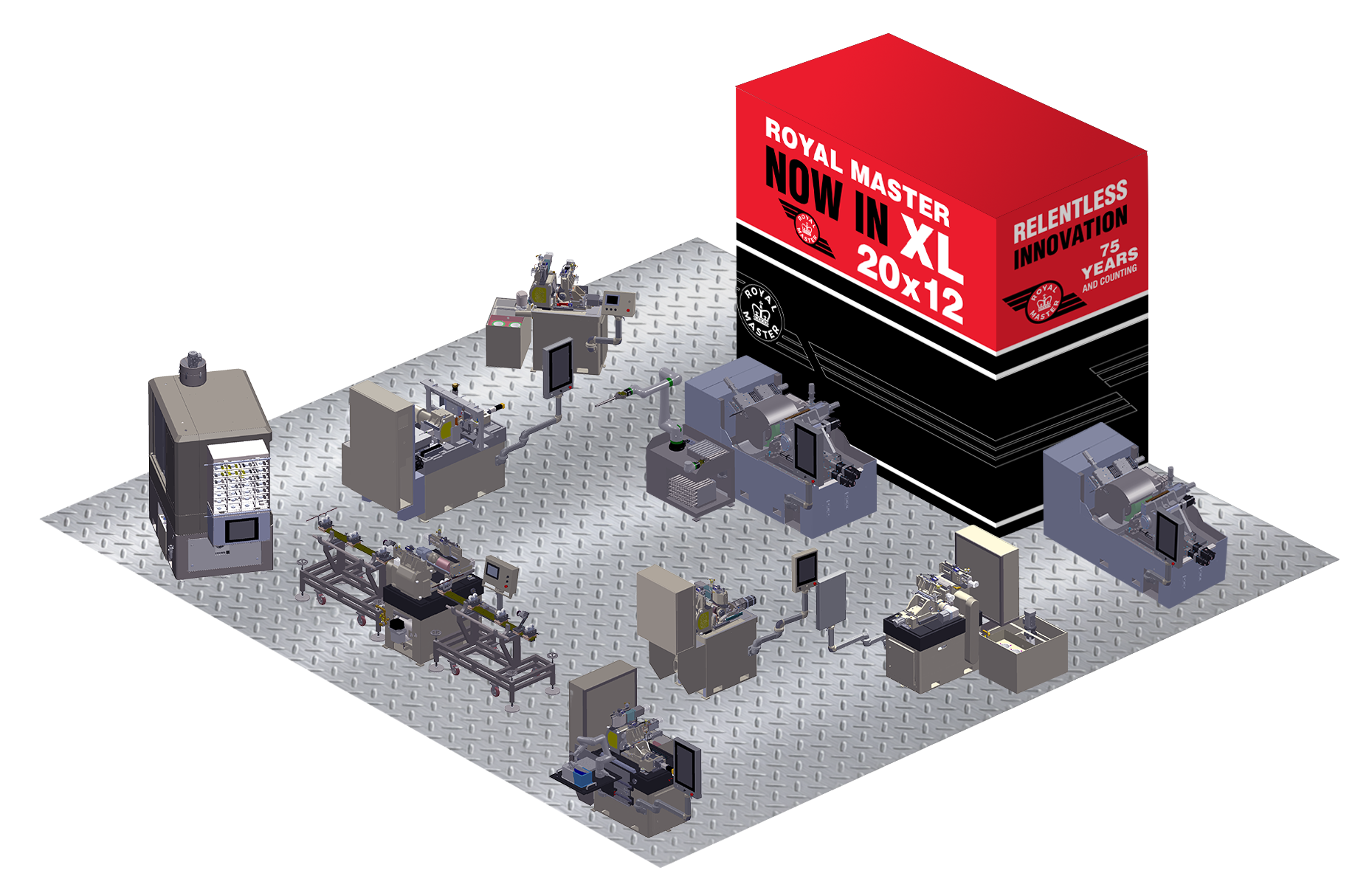
IMTS 2026 is coming to Chicago, September 14 to 19, and Royal Master will be at Booth 6626 in the North Hall with eight machines running live, including the debut of something totally new to our lineup.
This page is your preview. Walk through the machine lineup before you ever set foot in the building. See the specs, the real part each one grinds, and what makes it different from anything else on the market.
Planning to be in Chicago? Use this to map out what you want to see in person. Can’t make the trip? This is as close as you can get without walking the aisle yourself, and we’ll keep it updated as the show gets closer.
Explore the booth below. Each numbered machine corresponds to its spot on the floor and links to full specs and the story behind the part it’s grinding.
We’re not showing this one early. What’s coming is the largest machine Royal Master has ever built, and it stays hidden until the show floor opens. Check back September 14 for the BIG reveal!
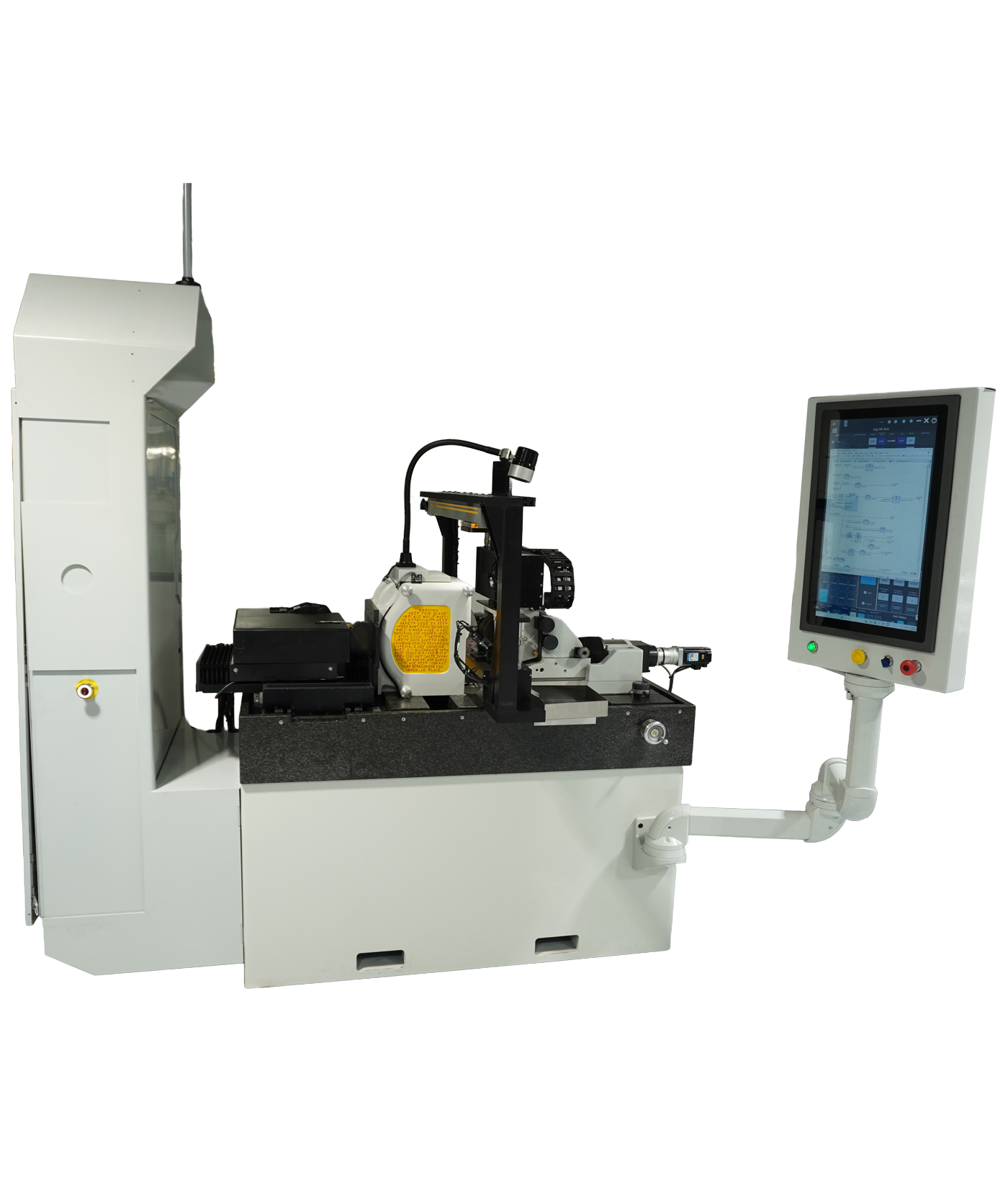
Right next to it, we’re pulling back bellows and waycovers to show you the engineering behind this new machine.
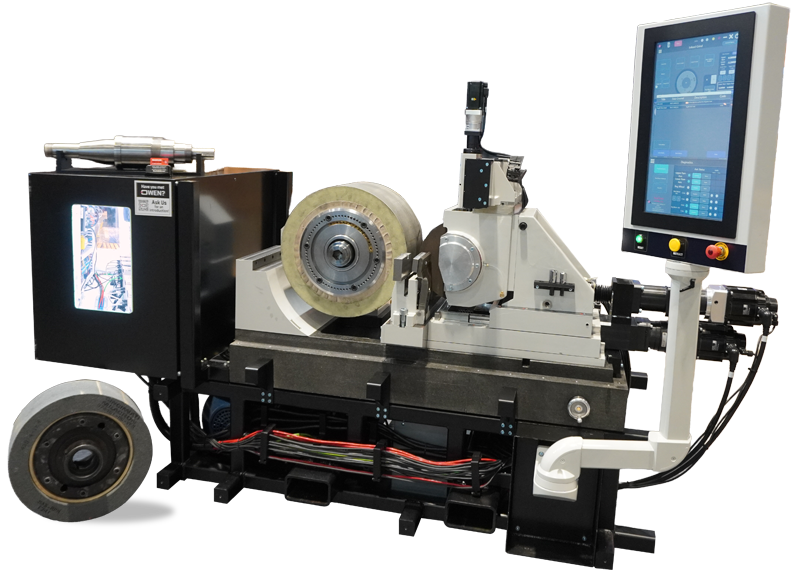
An 8″ thick Starrett granite base, lapped to .0002″ flatness, is where it starts — the foundation for the accuracy that’s built on it. A 9 nanometer glass scale delivers diameter compensations in quarter-micron increments, holding single-digit micron roundness. The straddle bearing design adds rigidity for heavy, consistent cuts. The 24″ three-panel touchscreen gives the operator a clean, intuitive interface to manage every aspect of the grind. The 8″ wide wheel supports multi-part infeed setups with CNC dressing on one or both wheels, increasing throughput without adding machines.
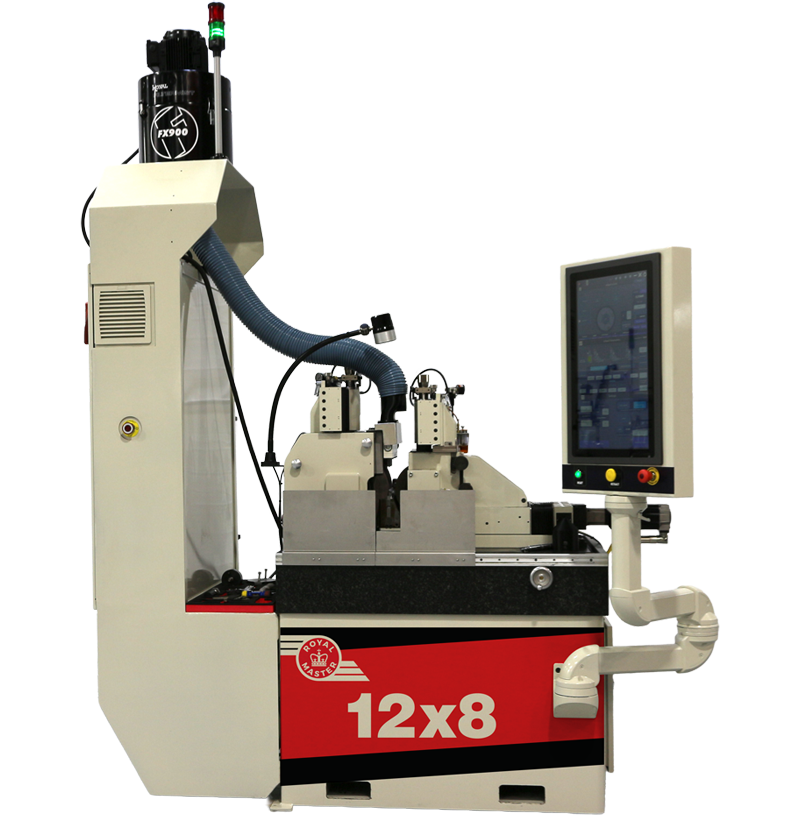
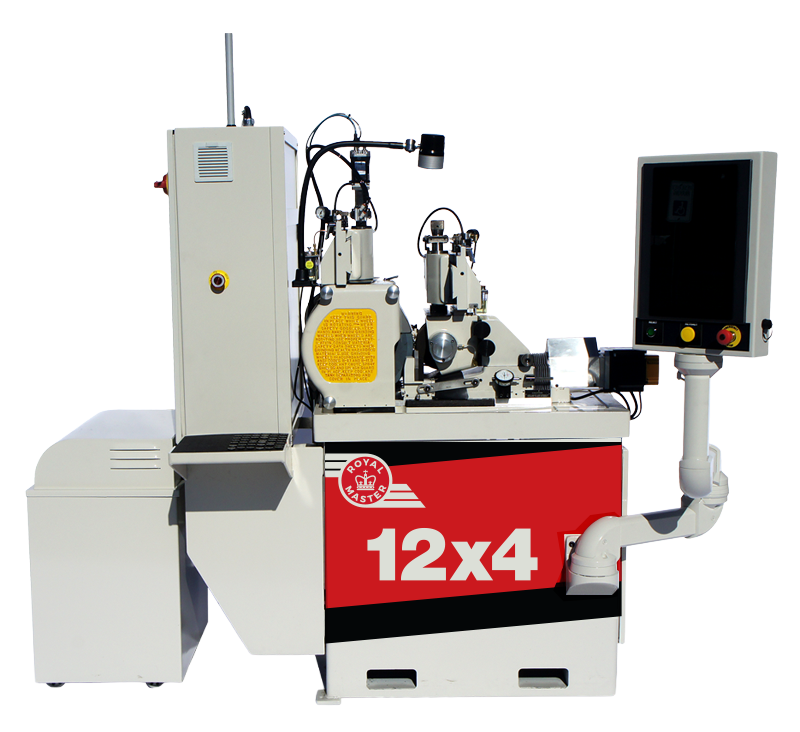
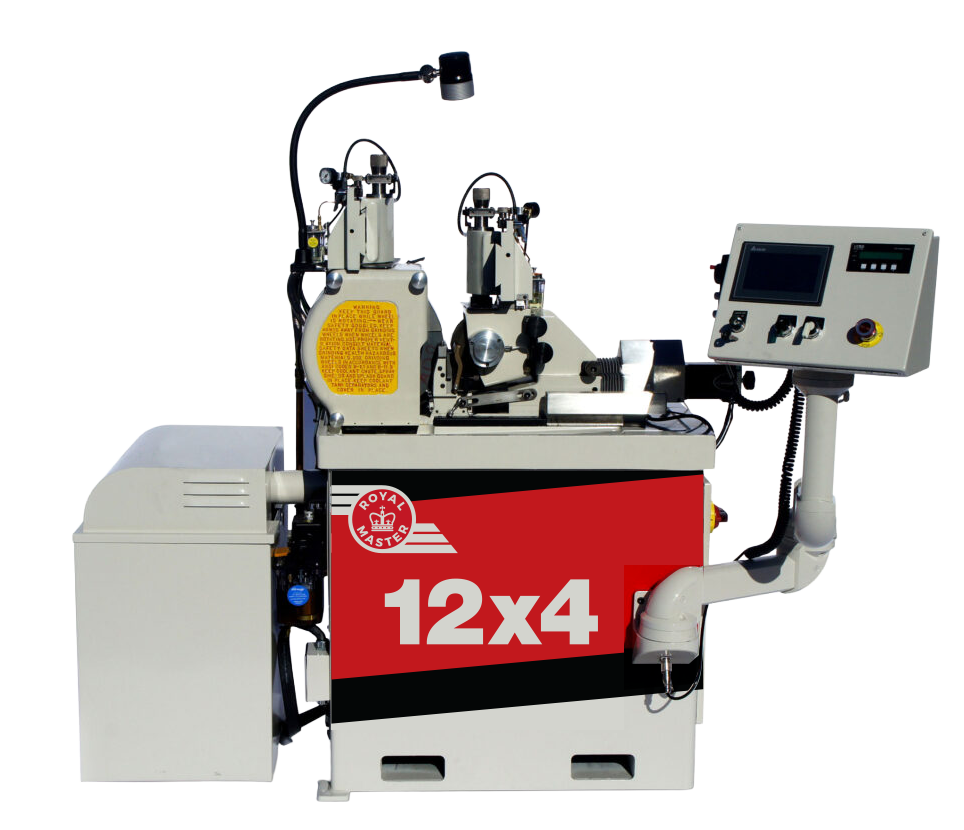
The 12×4 Servo Cycle is designed for hand-loading, making it ideal for direct conversation about the application right at the machine. The auto dresser on the grinding wheel handles applications requiring deep forms dressed into the wheel. Built for job shop environments where holding less than a tenth — under .0001″ — is the requirement. Precision and ease of use without the complexity.
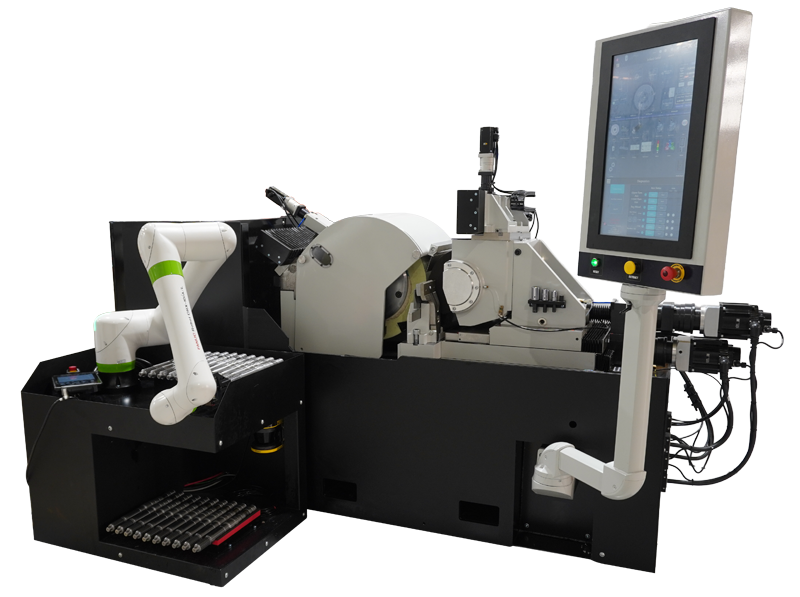
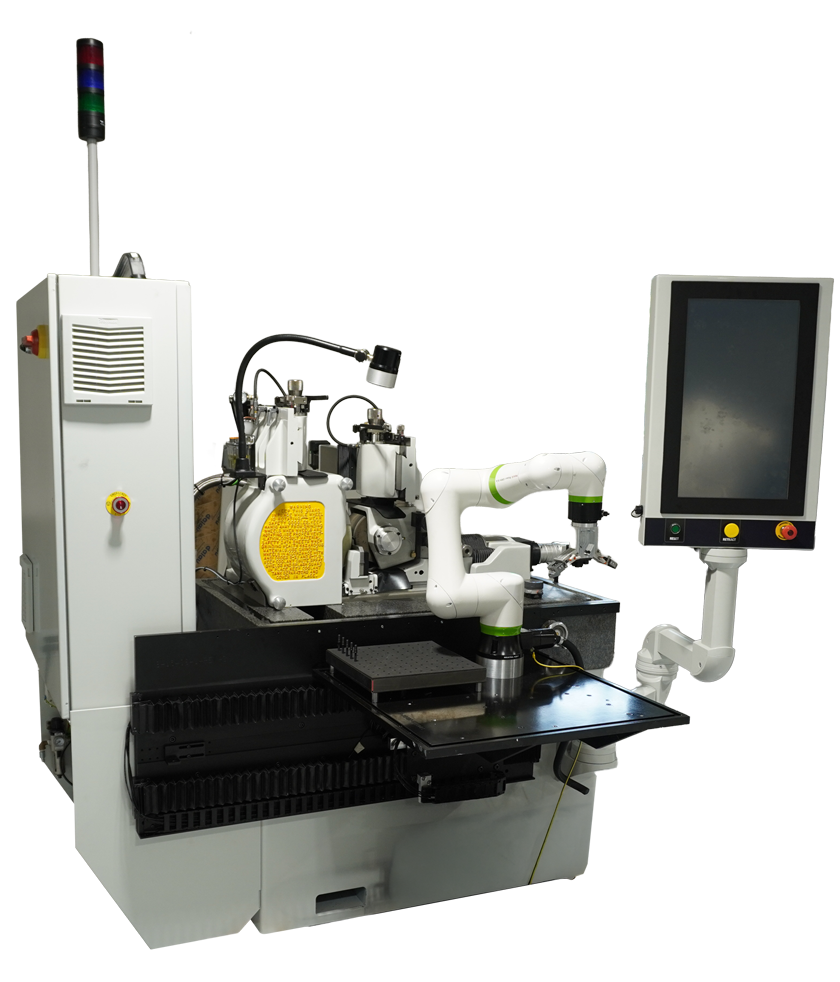
A 9 nanometer glass scale on the diameter axis makes quarter-micron compensations routine, with single-digit micron roundness achievable on the production floor. An 8″ thick Starrett granite base, lapped to .0002″ flatness, and a 24″ touchscreen with gauge feedback and data collection hold those numbers across months of production, not just a single shift. On the show floor, this machine runs a Fanuc collaborative robot with Schunk end effectors paired with a Feedall feeding table — live proof that precision and automation aren’t a tradeoff.
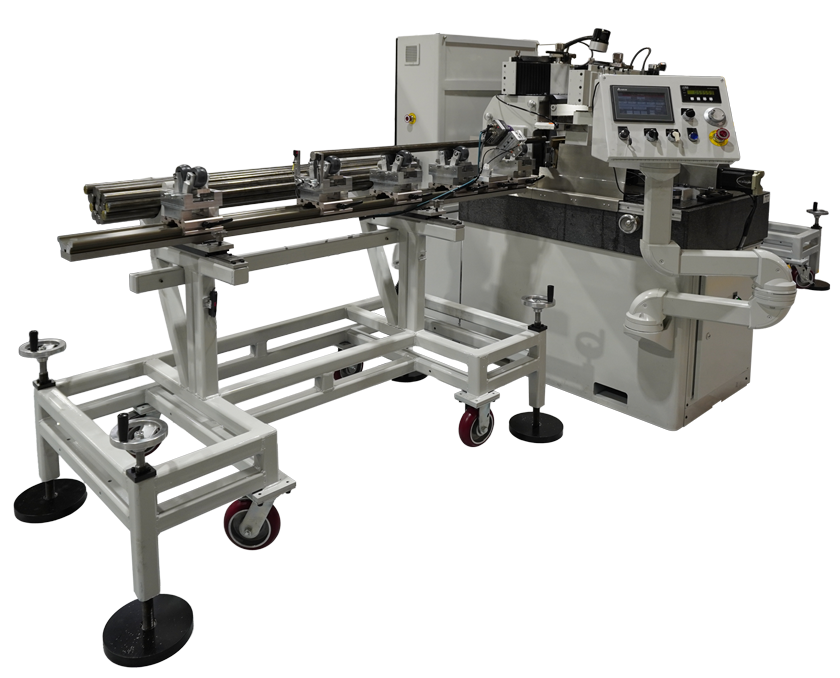
Bar stock grinding just needs to be done. This machine holds .0002″ over the full length of the bar, up to 1.5″ in diameter, using an 8″ wide wheel that removes more material per pass and handles tough materials, including superalloys. An outboard bearing on the grinding wheel adds rigidity for high stock removal on hard materials. Rigid outboard supports provide a solid foundation for the bars as they are being ground. With the optional auto loader, bars keep flowing without an operator standing at the machine.
The Thrufeed Microsize delivers micron-level diameter control in a compact 30″ x 54″ footprint. A 12″ x 4″ grinding wheel and 6″ regulating wheel cover diameters from .002″ to 1.5″, with 1 micron diameter compensations via pulse generator. No robotics. No hydraulics. Simple, accurate thrufeed grinding, all-electric, with minimal warm-up time.
Frozen Margarita anyone? We will have a fully automated surface grinder at the show. What is RMG doing with a surface grinder? Well, I guess you will have to come and see. This fully automated system uses full linear motor movements while grinding blender blades. A pallet system loads and unloads 6 parts per pallet, allowing for automation outside the confines of the machine.
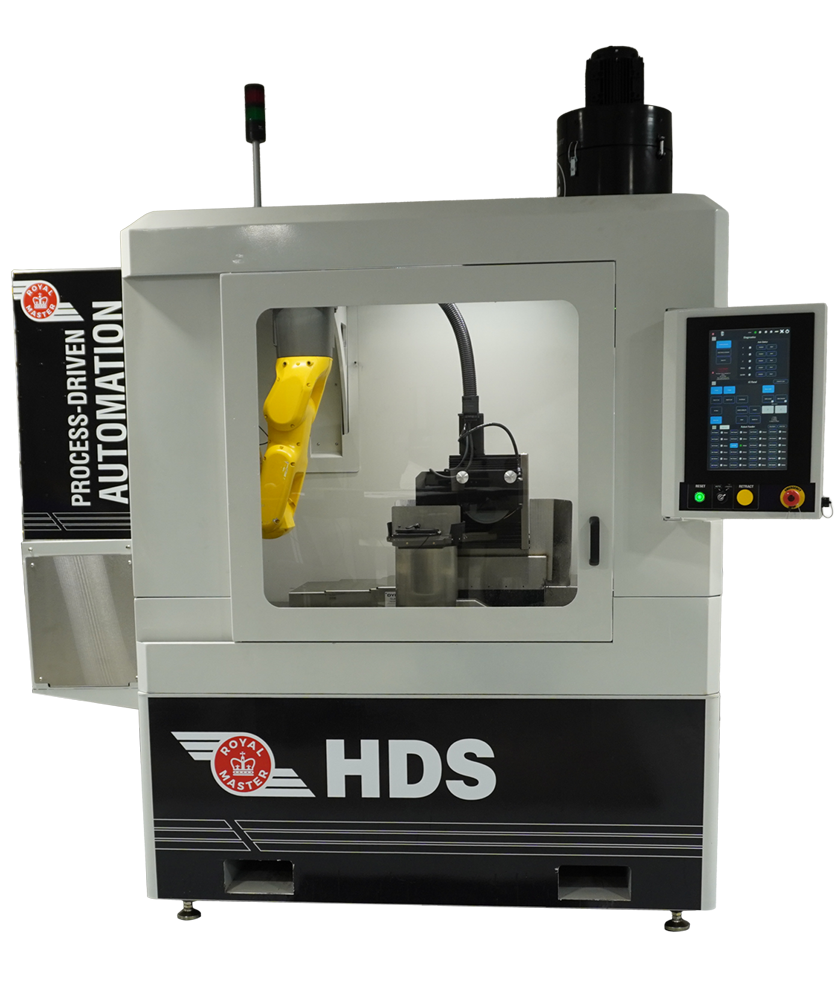
This machine’s CNC rotary disk dresser programs complex profiles into both wheels with 0.1 micron resolution on each dressing axis — 7 total axes of CNC control. A dual-jaw pick and place loader positions the part between the wheels, and when the grind is complete, the second jaw pulls the finished part and delivers it directly to a Keyence GT2 gauging station. Combined with acoustic emissions monitoring, the system is built for lights-out production where fractions of a second per cycle, multiplied across a shift, are real money.
If you have any questions or a project you’d like to discuss, bring your part drawings to the booth — or EMAIL them to us! We’d be delighted to help determine the best grinding approach for your parts and explore other aspects of your project.
| Cookie | Duration | Description |
|---|---|---|
| cookielawinfo-checkbox-analytics | 11 months | This cookie is set by GDPR Cookie Consent plugin. The cookie is used to store the user consent for the cookies in the category "Analytics". |
| cookielawinfo-checkbox-functional | 11 months | The cookie is set by GDPR cookie consent to record the user consent for the cookies in the category "Functional". |
| cookielawinfo-checkbox-necessary | 11 months | This cookie is set by GDPR Cookie Consent plugin. The cookies is used to store the user consent for the cookies in the category "Necessary". |
| cookielawinfo-checkbox-others | 11 months | This cookie is set by GDPR Cookie Consent plugin. The cookie is used to store the user consent for the cookies in the category "Other. |
| cookielawinfo-checkbox-performance | 11 months | This cookie is set by GDPR Cookie Consent plugin. The cookie is used to store the user consent for the cookies in the category "Performance". |
| viewed_cookie_policy | 11 months | The cookie is set by the GDPR Cookie Consent plugin and is used to store whether or not user has consented to the use of cookies. It does not store any personal data. |